Wednesday, June 30, 2010

A World Cup History Lesson

Today was the first day in a while without live World Cup soccer - which makes it much easier to concentrate on one's work. The Round of 16 games bought few surprises. Every group winner beat the group runner-up they were matched against, with the exception of the United States losing to Ghana. The officiating continued to be a problem, most notably in the Germany-England and Argentina-Mexico matches, though the superior team clearly won in both cases and would have won even without assistance from the officials. The exit of the United States was disappointing, but understandable given one fairly damning statistic: the US, which accomplished amazing things at this Cup by winning its group and with exciting comeback results, led for exactly 3 minutes out of its 390 at this World Cup, after Landon Donavan scored against Algeria. You can't dig yourself a hole and escape every game. Ghana became only the third African team to make it to the quarterfinals, and will try to become the first to make it to the semifinals, and Uruguay is beatable. But after they knocked my team out for the second Cup in a row and given their pathetic time-wasting measures such as lying down on the pitch without reason in the final few minutes against the US, I wouldn't mind seeing Ghana lose to another team with a compelling story, Uruguay. Uruguay are by far the smallest country to have won the World Cup, about a tenth of the size of Argentina in population, and they won the first Cup, in 1930, at home in Montevideo, then shocked hosts Brazil when the Cup resumed in 1950.

Three compelling match-ups await in the quarterfinals, along with Spain vs. Paraguay (two reasons to root for shock Paraguay victory: their gorgeous superfan, and the possibility of a Uruguay-Paraguay final to determine which nation is the guay-est). I think Spain will play against Brazil or the Netherlands in the final.

But for now, here's some World Cup history factoids since I've gotten so into the all-time records this year:
  • At the first World Cup, 1930 Uruguay, only four European teams decided to sail for South America, and random ones at that: France, Belgium, Yugoslavia and Romania. A odd total of 13 teams competed. The United States had their best ever result: not only did they finish in third place, but American Bert Patenaude recorded the World Cup's first-ever hat trick against Paraguay. Uruguay beat Argentina in the final.
  • For the second World Cup, 1934 Italy, defending champions Uruguay decided not to make the trip to Europe because Italy hadn't bothered to come to South America four years earlier. Mexico made the trip over the Atlantic, but then found out they had to play the United States in a play-in game in Europe even though the Americans had turned in their application late. The US won, so Mexico didn't get to compete. Sorry, that was sort of a dick move. The tournament did take on its long-running 16-team format here. Mussolini's Italy won the World Cup.
  • Only 15 teams got to play in 1938 France, because GERMANY ANNEXED AUSTRIA. Austria was one of the best teams in 1934, so maybe this was another reason for the Anschluss. World War II canceled the Cup for a while, when the fourth edition was finally held, in 1950 in Brazil, Germany was red-carded and had to stay home. The US shocked England in this Cup, but even more importantly, Uruguay shocked Brazil in the final.
  • 1954 saw favorite Hungary lose to Germany in der Wunder von Bern. No small European country like Hungary has ever managed to win the World Cup, this was probably the best shot. Instead, it was the beginning of Germany's impressive haul of championships.
  • In 1958 Brazil won the Cup in Sweden. This is the only time a South American team has won in Europe. The pattern has been Europeans win in Europe, Brazil and Argentina win in South America and Mexico, and Brazil wins everywhere else. Brazil won in 1962 and 1970. England won in 1966 at home against Germany, and had deja vu when a goal off the crossbar, much their winner in 1966, was discounted against Germany on Sunday.
  • If you look at just the last nine World Cups, Brazil, which has won the most total titles, doesn't look quite as dominant. Beginning with 1974, Argentina, Brazil, Germany and Italy have each won two World Cups, France has won one and lost another final in penalty kicks.
  • The tournament finally expanded to 24 teams in 1982 and again to the modern 32 teams in 1998.
  • So right now, 5 Cups for Brazil, 4 for Italy, 3 for Germany, 2 for Argentina, 2 for Uruguay, 1 for England, 1 for France. Four teams look to add to their totals in the next two weeks, while Spain, the Netherlands, Ghana and Paraguay aim for their first Cup first-place trophies.
  • The 20th World Cup will be held in 2014 in Brazil. Guess who will win.

Saturday, June 26, 2010

End of the Group Stage

After fifteen days of great soccer, boring soccer, and low productivity worldwide, we are accustomed to the sound of vuvuzelas and ready for the knockout rounds at the World Cup. Here are a couple big stories looking back and looking forward:
  • The embarassing implosion of the French team, from the players' striking to the government response to the coach's classless refusal to shake the hand of the South Africa coach after the last game, punctuated the 2006 runners-up's exit from the Cup. Defending champions Italy didn't go out so spectacularly, they just failed to win a game and finished behind surprising New Zealand. The announcer at the end of Slovakia's win over Italy said that 5 of 6 of the shots on goal against Italy were successful, the 2006 champs obviously missed their injured keeper Buffon. Only 6 (of the 13) European teams advanced to the second round, an all-time low: three time winners Germany, one time winner England, co-favorites Spain, perennial dark horses the Netherlands and Portugal, and Slovakia, which as the only new team at the World Cup has jumped all the way to 16th in FIFA's all time records table (they share Czechoslovakia's records with the Czech Republic). And all 6 European teams are matched up with other Europeans, so there will definitely be 3 European reps in the final 8.
  • 8 teams from the Americas entered the Cup, out of 32 teams in South Africa. Only one, Honduras, is going home, so the Western Hemisphere has gone from a quarter of the teams to nearly half. Five South American teams in the Round of 16 is an all-time high, four of them won their groups, as did the United States, while Mexico and Chile made it through as group runners-up. Out of the South American five, only Chile lost a game (to Spain). Asia did surprisingly well, with both South Korea and Japan advancing without much difficulty. Africa's performance has been disappointing given the raised expectations of a Cup in Africa. Algeria didn't score a goal, Cameroon, which had the easiest path out of their group, failed to get a result. Hosts South Africa failed to get out of their group due to a bad loss to Uruguay, the first time the hosts failed to get out of the group stage, but they performed respectably for the second-lowest-ranked team in the tournament. Nigeria was good enough to advance but failed to. The exciting Ivory Coast team fought valiantly in the Group of Death for the second Cup in a row. So the hopes of all of Africa are now on Ghana, the United States' opponent this afternoon.
  • There are some great match-ups coming up in the next few days: Germany-England, Spain-Portugal, Brazil-Chile especially, but USA-Ghana is a rematch of the pivotal group game in 2006, in which Ghana eliminated the US and advanced. We're in the most wide-open quadrant of the bracket now. While the winner of Germany-England will face Argentina and the Netherlands will face Brazil in tough quarterfinal match-ups, and Spain should sail through to the semis if they can get past Portugal, one team out of Uruguay, South Korea, the United States and Ghana will be the surprise semifinalist at the 2010 World Cup. I'm rooting for the USA to turn in their best Cup performance since 1930 and then face Brazil or the Netherlands. But Ghana going further than any African team ever (Cameroon and Senegal have made the quarterfinals) would also be a great story, as would a strong tournament for Uruguay, winners in 1930 and 1950, the original South American Cup hegemons despite their small size. South Korea has a less compelling storyline for me, as they made the semis 8 years ago at home, but another semifinals for the Koreans, halfway around the world, would gain a lot of respect for Korean and Asian soccer.
  • Diego Maradona. 'Nuff said.

Sunday, June 13, 2010

World Cup, Day 3

When Clint Dempsey's shot slipped through Robert Green's hands yesterday, the American ran down the field pointing his fingers and his eyes to the heavens. With good reason - America's draw against England can't really be attributed to an impressive performance by its strikers or midfielders, and the less said about the defenders the better. Chalk it up to a combination of divine intervention or luck, whatever you prefer, and Tim Howard's top-notch goal-keeping. The draw was a fine result for Team USA. England, who I believed was one of four or five teams that could win the Cup (Spain, Brazil, the Netherlands, England, maybe Argentina), did not look bad but nor did they look like champions.

Germany, on the other hand, just made a statement. Given that their goalkeeper had committed suicide last year and that their next-choice goalie and captain Michael Ballack were out of this Cup, I predicted Germany, along with fellow European powers Italy and France, was headed towards a disappointing Cup, even a first-round knockout in Group D, which looked decently tough before today. But after today's results Germany and Ghana have momentum, Germany looks like a contender, Ghana looks like it might be Africa's great hope, Serbia looks haunted by the prospect of second consecutive bad Cup performance, and you can stick a fork in Australia's ass and turn them over, they're done, with their best player red-carded out of the last two group games.

Little Slovenia is next up for the Americans. When I was shopping for jerseys I considered them, as their mountain outline is either one of the coolest jerseys in the tournament or a bit too Charlie Brown. But Slovenia gear was off-limits because they're in my team's group. I see a US victory and the US and England both in the Round of 16, with England more likely to finish first on goal differential or America drawing one of its two remaining opponents. Then Germany would be a scary opponent, but we'll see how they play in their next two games. Ghana is capable of beating them, and from the qualifiers, you would think Serbia able as well.

And then there's Greece, who I had picked as my second-favorite team in the Cup, based on my Greek roots and the present situation of the country (this job is flexible, last year it was held by home team Germany). I picked them for the semifinals on a whim, but now I don't think they're going to make it out of the group. They were easily outclassed by South Korea yesterday. Which means they're playing for respect, and against history. I've found many interesting nuggets of information in the Goldman Sachs World Cup 2010 and Economics report. One of which is that only one team has played a full six games in the World Cup without winning at least a draw. But Slovenia, Greece, and New Zealand could all have joined El Salvador in this ignominious record by the end of this World Cup. With its victory, Slovenia has more than a snowball's chance in hell of actually advancing to the second round ahead of the United States or England. But Greece and New Zealand could yet match the record. Greece, additionally, has lost four games, and never scored a goal, with 12 goals against it. Only Zaire, which was outscored 14-0 in its one Cup, has a more lopsided history. El Salvador's goal differential is 1-22. To escape ignominy, Greece must beat or draw mighty Argentina or Africa's largest county, Nigeria, which has a very good keeper. So good luck Greece, you'll need it.

Friday, June 11, 2010

World Cup, Day 1

Since the last World Cup, I have mastered the arts of international affairs (incidentally, this is the excuse I have for not posting for a month - celebration around graduation). So I came up the following formulation: in the world of soccer and in the international system, the roles of the United States and Brazil are reversed. In the real world, the United States is the hegemonic superpower and Brazil is the emerging great power that isn't quite there yet (as the West, Russia and China's response to the Brazil and Turkey-brokered deal with Iran on nuclear energy shows). In soccer, the roles are reversed. The USA is one of the most likely countries who has never won the World Cup to win one this time or in the near future (Goldman Sachs gives the USA a 2.81% chance, ninth most likely overall, behind fellow never-wons Spain and the Netherlands and a bit ahead of fellow dark horses Serbia, Mexico and Portugal). But they are an underdog, and it makes them easy to root for.

It is Day 1 of the World Cup, and while I have not managed to write about the Cup ahead of the start of play, I have been eagerly anticipating this day and am plenty inspired now. I have made my predictions with several brackets, bought a Greece jersey as I have decided to make them my second-favorite team, at least at the start of the tournament (why? because they've been in my thoughts, and I am of one-eighth Greek ancestry, and because I thought it would be fun to wear that jersey at European Studies cocktail parties around graduation; its cooling technology also made it a great choice to wear under the graduation gown), and have washed my USA jersey for tomorrow's match with England. Today I was drinking a Dos Equis at Cafe Citron watching the Cup opener on Univision with a bunch of Mexico partisans before 10:30 a.m. Unfortunately I had to closely watch my alcohol intake during the games today, with an afternoon optometrist appointment, lest the World Cup leave me with several years of headaches from a bad prescription, that would be a truly terrible hangover.

OK, not a game was won today, but the games were quite enjoyable, and host South Africa got a good result, if disappointing considering their chances for more goals. The vuvuzela horns made their presence known, filling bars across six continents with a droning noise to accompany the match and the commentary. South Africa is an easy team to root for, we'll see if they can make it out of the first round. I also like Uruguay, perhaps the most improbable of the seven teams that have won the Cup (Brazil five times, Italy four times, Germany three times, Argentina and Uruguay twice, England and France once). Uruguay hasn't won since 1950, but still, all the other countries that have won are much bigger (Uruguay has about 3.5 million people, Argentina has more than 40 million and the others are larger).

I love the World Cup, it is indeed my favorite sporting event. Four years ago, I was lucky enough to be living in Hamburg, teaching less than 20 hours a week, and had plenty of time for enjoying the full Cup experience, and the fantastic chance to blog about it for the International Herald Tribune (the 2006 blog site is no longer online, and I had technical difficulties posting my writings a week ago, so let me know if you really want to read them and I can e-mail you my copy as Microsoft Word document). Four years prior to that, Team USA's surprise showing made me a World Cup fan. I had to leave home for the airport to fly to Alaska, where I was spending the summer, in the middle of the game against Germany, and did not see the Cup to the end from the Alaskan wilderness, where I was learning the arts of birdwatching and bicycling and hiking on glaciers and living in a tent and drinking my dirty dishwater. But the experience (along with playing youth soccer in Mia Hamm's old league, the Annandale Boys and Girls Club of Northern Virginia) primed me for football fandom when I arrived in London for my study abroad program the next year.

Speaking of England, tomorrow's match is simply the most exciting of the 48 first round match-ups. If any of the 32 teams could play any of the others, North vs South Korea might be most interesting, but that's impossible because they're both from the relatively weak conference of Asia which only gets four slots. Brazil vs Portugal is another great match-up of former colony vs its old master, and the level of football might be even higher there, except that it's a game 3 and chances are both will have advanced already and the stakes won't be as high. So USA vs England is the pick of the group stage. Like many a patriot, I'm predicting a USA upset. It won't be easy though. I really think Germany, Italy and France are all going to have disappointing Cups, which leaves England as one of the strongest European powers. But then there is Spain flying high in recent years, and ever-dangerous Holland.

OK, lest I go on for too long, here are my picks for the cup, from my brackets. I filled out a bracket in January when I first could, and picked Spain to beat the Netherlands in the final (by the way, Argentina, Brazil, Germany or Italy has played in every final, so this would be unprecendented), with the United States and England both making it to the semifinals. In May, I couldn't edit this bracket because I couldn't remember my user name or password, so I just discovered this today, although I remembered I had picked Spain. In my main bracket, my May bracket, I picked Spain over Brazil, with the United States and Greece in the semis. And yesterday, not being allowed by ESPN to enter my May bracket in a fourth group, I chose to go a little wilder on the group stage, and ended up with the Netherlands over Spain simply because I had given my bracket a Dutch name from a Wikipedia article on the Dutch War of Independence and why not (although a Dutch victory would probably give rise to mixed feelings for many in South Africa), with the United States and England again in the semis. So those are the teams I think are going to have a good Cup. And we'll just see what happens.

May Wayne Rooney sleep tonight like Richard III before the battle of Bosworth Field. USA! USA! USA!

Saturday, May 8, 2010

Touring Europe Without Leaving Washington

In April, skies blackened above Europe as Iceland's Eyjafjallajokull volcano spewed ash over an area of thousands of miles and as far away as Russia, causing the cancellation of nearly all flights to, from, and around the continent and, in short, utter chaos. Then the markets' confidence in Greece's ability to survive a sovereign debt crisis went from bad to nonexistent. European leaders eventually faced up to the existential nature of the crisis in the eurozone but contagion had already started to spread. Protests in Athens against austerity measures turned into deadly riots featuring Molotov cocktails. Then British voters delivered twin scary results for the country's economic stability and its place in Europe - a hung parliament and a Tory plurality. And the volcano has decided it isn't finished yet.

The state of Europe’s union is not strong. It is being sorely tested. Hopefully it will come through a tough couple years and be stronger than ever. On Saturday in Washington, DC, the EU was putting its best face forward, welcoming hordes of fascinated Americans and other citizens of the world into their 27 embassies plus the delegation of the EU itself for its annual Open House Day. As a theme, the embassies were encouraged to promote the EU’s relatively impressive record on alternative energy, which some took more seriously than others.

I made a day of it, and managed to exceed my own expectations, visiting seven embassies from 10 a.m. to 4 p.m. This was a cool opportunity - DC has upwards of 180 embassies, many with multiple buildings, packed into it, but I had only ever been inside one - that of the Russian Federation for a tribute Andrei Gromyko featuring Henry Kissinger. I began by walking down Florida Avenue towards Dupont Circle, my usual path to school, but kept going on Florida until I reached the cluster of embassies west of Dupont and east of Rock Creek. This is home to a third of the EU buildings as well as the delegations of a couple more countries which would like to be in the EU (Turkey, Albania, Moldova, which shares its building with one of my favorite restaurants and classy bars, Russia House). My friend Phil had worked in the US embassy in Estonia last summer and we met outside that cozy corner embassy at the intersection of Florida and Massachusetts and 22nd Street, across the street from Luxembourg’s ridiculously oversized palace, along with his girlfriend Ulla from Austria. The Estonians still had their front door locked and seemed surprised to see us at 10:15. They also lacked a stamp for the “passport” on the Open House Day brochure, as it was apparently in New York. A filmstrip showed pictures of Estonia’s nature and wildlife. This is a lovely, charming and beautiful little country (the EU’s fourth-smallest by population), I was there in January in Tallinn for two days and nearly dropped out of graduate school to take a job at the hostel. Estonians are quiet but friendly. Designer clothes by Reet Aus made from recycled materials, including a blouse decorated with little moose, hung in the corner. Photographs displayed the late President of Estonia Lennart Meri with Boris Yeltsin, Vice President Al Gore, First Lady Hillary Rodham Clinton, and legendary diplomat George Kennan, who worked at the American embassy in Tallinn in the 1930s. We picked up booklets like Minifacts About Estonia 2009. Did you know the national stone of Estonia is limestone?

Next up was Greece. I had a vague idea of touring the PIIGS, the peripheral economies that the market is so worried about, plus Britain, which also had a terrible public finances problem and just had a fascinating election. I spent Thursday night in front of my computer, watching the 650 constituencies of the United Kingdom turn 11 different colors, until the Green Party won Brighton Pavilion and I decided I needed to go to sleep at about 1:30 a.m. Plus the Embassy of the United Kingdom had a fascinating description of its activities in the brochure: “Britain on Your Doorstep: The Embassy will showcase the Ambassador’s Gardens and a Bazaar highlighting the armed forces, arts, whisky, eco-friendly displays and family activities.” Much more interesting sounding than “Come visit the Embassy of Luxembourg for the day!” Plus we kept seeing people with complimentary fancy plastic displaying the Union Jack. But I sadly did not make it to the UK embassy. It does serve as consolation that both the ambassador and his deputy visited my Modern British Politics class at SAIS this semester.

Greece’s line was long, absurdly so once we left though still shorter than Ireland’s across the street, but bad enough at 10:45. The line kept going once we were inside the embassy’s basement, because the Greeks had not yet become so austere that they could not offer us delicious samples of olives, olive oil, tzatziki sauce, and cookies, along with pamphlets, maps, and raffle tickets for an Aegean cruise. Ulla got frustrated and went outside because she dislikes olives and perhaps Greece. I enjoyed the snacks and a few minutes of traditional Greek dance before moving on outside. I am partly of Greek extraction myself (it may well account for my family’s wiliness) and visited in 2003. I would like to return someday. My sister Anna went last year and made it to our ancestral island of Nissiros, right off the coast of Turkey south of Kos. By her account, it’s the only Greek island where the women have big thighs instead of long beautiful legs. It comes from climbing up and down the volcano, which started going off around the turn of the century, driving most of the population into the arms of America.

I left Phil and Ulla at Starbucks and joined other friends, Cory and Ben, in the line at the Portuguese embassy. This line wasn’t so long but it was slow. Then again, Portugal’s embassy isn’t so huge as Greece’s. It is quite nice, and the Portuguese were formal about it. We entered in groups for a three step tour. An overstressed mother yelled at us for cutting in line, which we didn’t, and told us not to do it again. The military attaché, an officer of the Portuguese Air Force, brought us into a small room where we were shown a video about Portugal’s substantial use of alternative energies. We walked by a painting of the country’s original ambassador to the US, who was such good friends with Thomas Jefferson that he lived at Monticello for a few months. The current ambassador, João de Vallera, greeted us all personally in his office, where he talked about the historically excellent relations and economic linkages between our two countries. On his desk was a copy of the Financial Times and Cory spotted additional material about understanding the EU economy. Portugal is being targeted by the speculators, a bit unfairly, as the weakest link in the eurozone after Greece. The country simply does not grow that fast, with low productivity growth exceeded by higher wage growth, although its public finances are not terrible. I hope Portugal doesn’t get screwed by the crisis. I spent a lovely week in Lisbon in spring 2006 and have a love for the country, that city, and its food. We got to sample mini pastéis de nata, wonderful custard pastries that are great with coffee, and a drop of port wine, which is one EU export which I purchase multiple times a year.

The day was hot but windy, and my eyes were being continuously attacked by specks of dirt and plant matter. The lines for the shuttle buses between the embassies were very long, which is why we decided to skip the UK and take the Metro to Van Ness and visit the Slovak embassy. Central Europe – Austria, Hungary, the Czech Republic and Slovakia – are based much further to the north than the rest of the EU, in another cluster of chanceries which also includes Israel, Pakistan, Bangladesh, Egypt, Nigeria, and the United Arab Emirates. It appeared that there was a long line for Austria and no line at all for Slovakia (it turned out that the line was for the shuttle bus). But Slovakia was nice, children in national dress handed us helpings of dumplings and sauerkraut, a traditional band played, arts were on display, and the backyard had a Friends of Slovakia Wall of Honor. I had my picture taken with it, as a friend of Slovakians (and housemate of one of them). Slovakia’s best friend, however, is US Steel, which was honored on about half of 50 or so plaques. We went back for more dumplings. Slovakia had limited tourist information – mostly about its skiing – and not much about alternative energies. Robert Fico’s government has decided not to close old nuclear plants near the Austrian border that Slovakia was supposed to shutter when they gained entry to the European Union. Austria was not pleased.

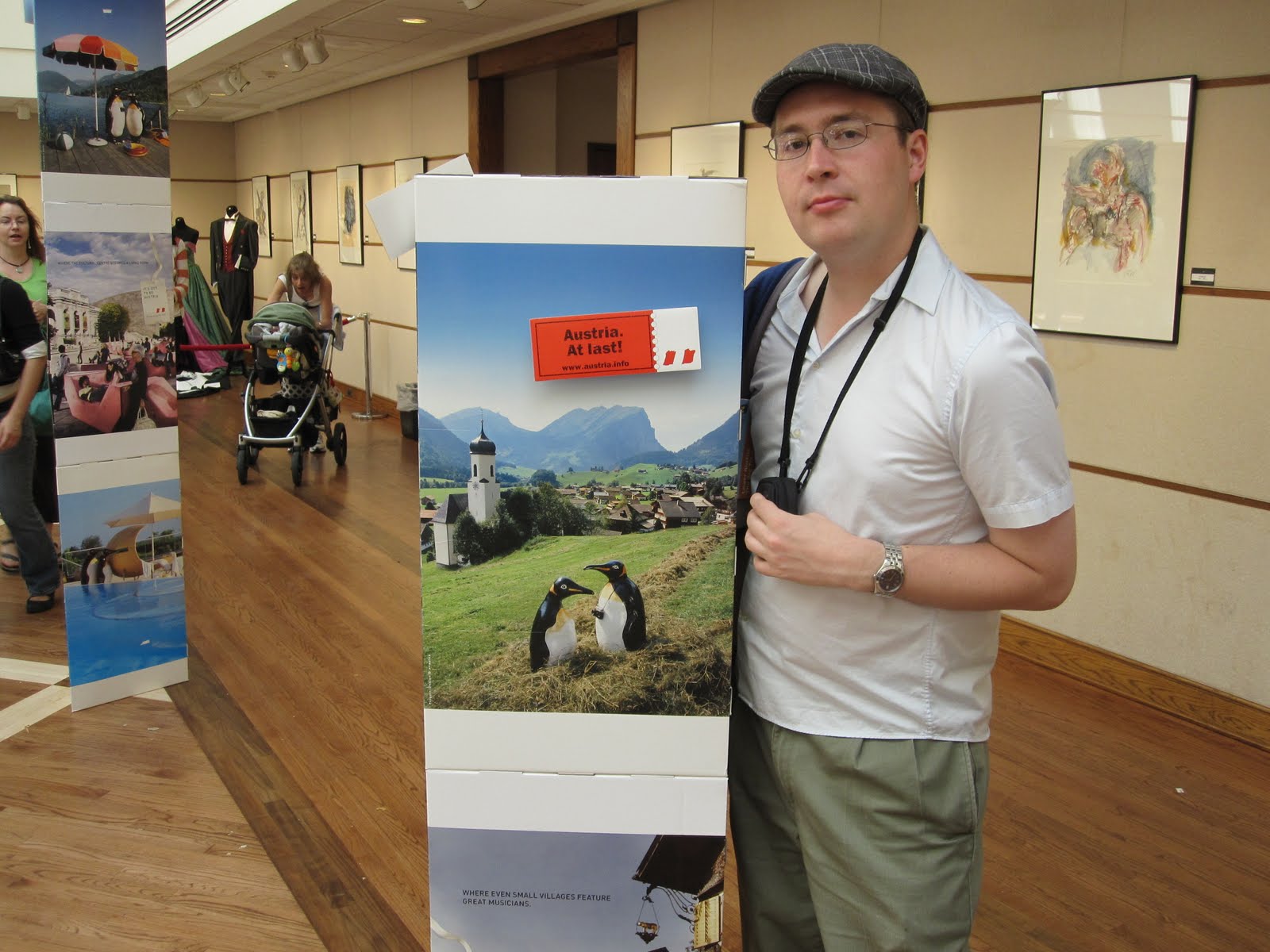
With plates of dumplings and sauerkraut in hand, we moved on to Austria, where we surprised by the lack of the line. Given what the people downtown were experiencing, we had clearly made an enlightened decision in coming to spend our time with Central Europe. However, there might have been one good reason Austria had no line – they were already out of strudel. But I didn’t mind, because there was still free wine, free coffee, free information on master’s programs in History of South-Eastern Europe and free tourist publications about hiking in Tirol, which has many gorgeous mountain landscapes and women.

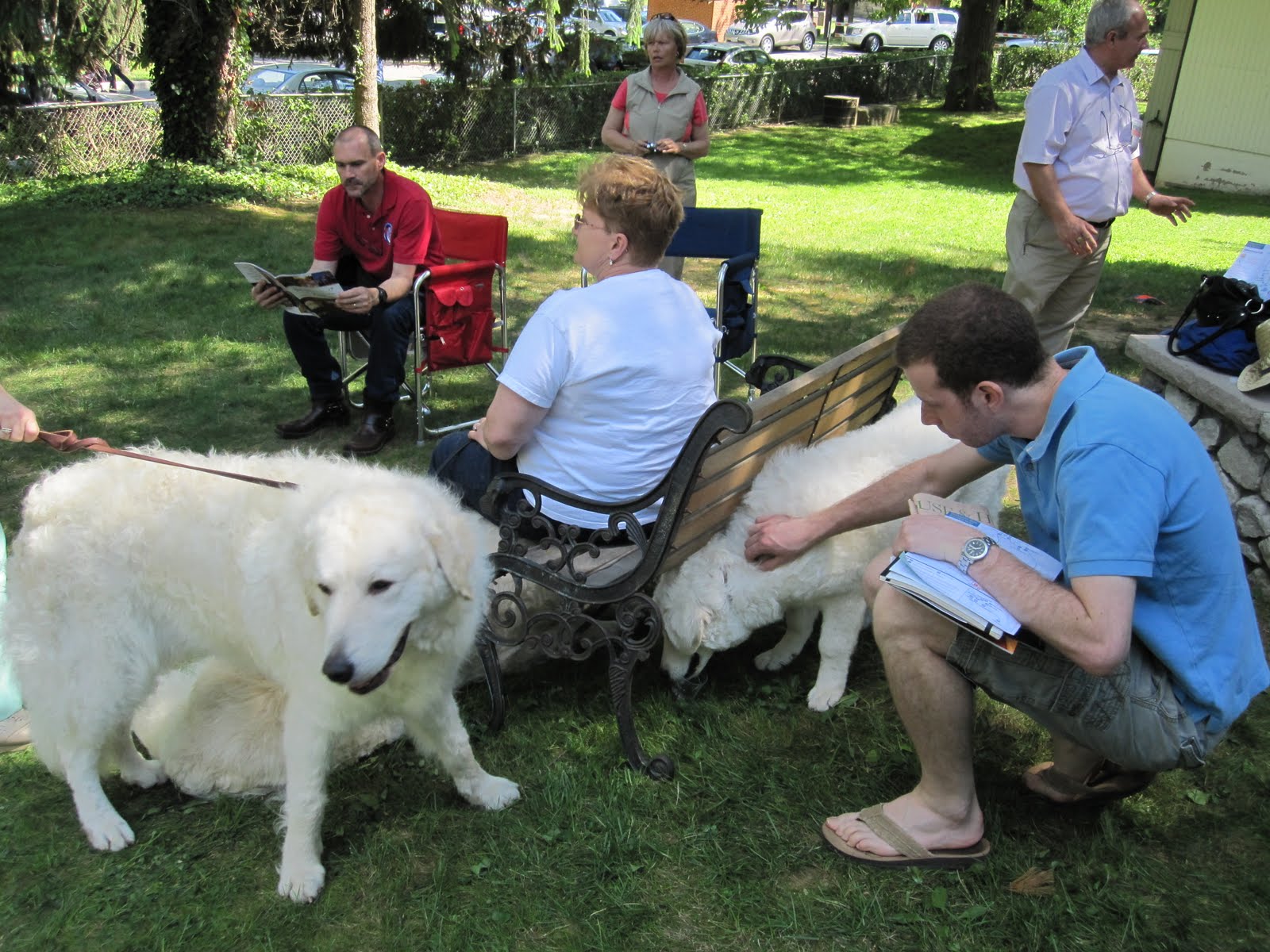
The bus line was still endless, so we followed a bevy of chattering Fräuleins back towards Connecticut Avenue, where Cory left us to go read at his restaurant before his shift. Ben and I continued on foot down the hill to the edge of Rock Creek Park, where the Hungarians and Czechs have embassies on Spring of Freedom Lane. Outside the Hungarian embassy lounged a number of fine specimens of the Kuvasz, a beautiful white Hungarian dog, and the Vizsla, a less beautiful in my opinion but apparently also nice Hungarian breed. Inside we saw displays of lace and china, and a couple performed a Hungarian dance in traditional dress. The couple then offered to teach the dance; I was more interested in the goulash and wine but at this embassy you had to pay for the food. Perhaps wisely, given that Hungary has been the subject of an IMF rescue since 2008.

We walked back up the hill to the Czech campus. Young women in traditional dress greeted us at the entry, we moved through the building without spending much time with the modern Czech designs on display to get the free beer – a generous full glass of Pilsner Urquell rather than an ounce of booze like most samples today. We sat on the sunny hill with many others, drinking our afternoon beers, and watched a cluster of red, white and blue balloons escape into the sky. We just missed getting to go up the path to tour the ambassador’s residence as a woman put a chain across the gate as the clock struck 4.

Enough European embassies for the day, I suppose. I took the Metro home with several pounds worth of tourist pamphlets and informational booklets wrapped inside my jackets and passed out on the couch. If I’m still in Washington next May, I will definitely embark on another day of touring the embassies of the European Union. As long as the European Union is still here then… (don’t panic, it will be).

Penguin Revolutions

The blog has a new title, and I will be finished with graduate school in 5 days, essentially, so you should be hearing more from me. The Penguin Revolutions is what some dubbed the January 2009 protest that led to the ouster of Ivar Godmanis' government in Latvia in February, the first government to fall in our global financial crisis. The prime minister had told citizens to huddle together to get through the economic turmoil, as penguins huddle together for warmth to get through the cold winter. They followed the instructions, huddling together outside the parliament and throwing snowballs and cobblestones through windows.

Thursday, April 29, 2010

The Rape of Europa; or Greece and Germany, You Disappoint Me


Last night in my Balkans class I brought up Greece, which has by now rejoined Europe’s messiest region (not including the Caucasus). Asked by the professor what I thought about the debt crisis, I said that given what we had seen in the last three days (the sharp rise in debt yields for Greece, Portugal and Spain and debt downgrades for those countries), the euro was finished. That’s a bit hyperbolic, as I tend to be, especially when I talk rather than write. But the problem is huge and I do believe the European Union as we know it is on the brink and we are likelier than not to see some major changes.

There is plenty of blame to go around. True fiscal federalism and a United States of Europe are not what the citizens of the European Union want, so there are political limits to the centralization of fiscal decision-making, which would the best way to ensure a stable common European currency. I do not support the argument of those who wrote ten years ago that the euro was doomed and who are now eagerly writing columns to prove that they were right. The euro was a much greater success than anyone anticipated for a full decade. There were two large policy problems beyond the inevitable and insurmountable economic asymmetries which have led to the problems of Spain, for example, which experienced a construction boom and built up external private sector debts and cannot devalue its currency in the crisis because it is on the euro. The first was that the rules of the Stability and Growth Pact limiting debt to 60% of GDP and deficits to 3% of GDP, which Germany insisted was necessary, were not followed, by the Germans and the French among others, well before the crisis of 2008 and onwards, which has required flexibility. Across the eurozone, the rules to limit vulnerabilities were flouted in normal economic times. Secondly, Greece lied about its numbers to get into the eurozone and continued to lie about its numbers until autumn 2009.

I believe the Greek crisis might still have been solved by a skillful response to the crisis by the European Union and the International Monetary Fund. But this did not happen. Nicolos Sarkozy wanted to keep the IMF out, partly because he is worried that Dominique Strauss-Kahn could be his opponent in the next presidential election. Germany wisely insisted on IMF participation. But Angela Merkel’s government has wavered so much on allowing the EU to do its part in rescuing Greece that the uncertainty in the markets has made the necessary rescue package larger than it had to be and less likely to succeed in helping Greece avoid default. As of a few days ago, I am 99% sure Greece will default. Why has Merkel allowed this to happen? Because rescuing the Greeks is enormously unpopular with the German public, and there is an election May 9 in Germany’s biggest region, Nordrhein-Westfalen (which includes Cologne, Dortmund, Essen, Düsseldorf, and a quarter of Germany’s citizens, actually a larger population than that of Greece). If Merkel’s Christian Democrats lose the region to the Social Democrats, they lose control of the upper house of the German parliament, they will have trouble getting their agenda enacted, and early federal elections could result. So Merkel can make an argument that she is acting in the wishes of her countrymen and bowing to political realities. But she is also sacrificing the interests of the entire European Union over the region of Nordrhein-Westfalen. Small-minded priorities are not new in Europe – Greece’s objection to Macedonia’s name is a perfect example – but Merkel is the most powerful woman or man in Europe, she knows it, and she should act accordingly.

The stakes are quite high. Contagion could result in multiple sovereign defaults. If only Greece defaults, the eurozone should be able to survive. If Spain goes down, it’s hard to predict what happens. Reintroducing the old currencies would be tremendously damaging to the peripheral economies. But if Spain defaults, we really would be in a “moment of extraordinary politics,” to use Leszek Balcerowicz’s phrase. What I anticipate is that a two-speed Europe would then become inevitable. A German-led core of the strongest economies, looking much like the original European Community of six nations (Bundesrepublik Deutschland, France, the Netherlands, Belgium, Luxembourg and Italy) plus a few like Austria and/or minus Italy, would have the euro, more fiscal federalism, and perhaps a more unified foreign policy. A ring of European states would be affiliated more loosely, naturally led by Great Britain, but including Greece, much of Eastern Europe and sooner or later possibly Spain, Portugal, and Ireland if they did not manage to or did not want to stay in the core, possibly Turkey (the lower-speed of a two-speed European Union is the only way Turkey would ever gain entry) and perhaps Norway, Iceland and Switzerland. It is hard to work out exactly what the looser group would share with the core Europe or how many of the EU-27 would choose or be forced into it. Perhaps there would be three “concentric circles” rather than two. But a Spanish default would change the European Union significantly.

One thing is certain even if Greece dodges default – Germany and the other members of the eurozone are going to be very wary of letting additional members into the common currency area from now on, although according to the accession treaties Bulgaria, the Czech Republic, Estonia, Latvia, Lithuania, Poland, Romania, Slovenia and Sweden are all obligated to join the euro eventually (only Denmark and the United Kingdom are excepted). For Latvia in particular, a country which has suffered an internal devaluation as its leaders have clung to a tight currency peg to the euro and an as-soon-as-possible euro accession strategy like a raft in the storm of a crash which has cut the value of the economy by 20%, changing rules would be extremely cruel. The crisis in the eurozone and the European Union could also delay the EU membership of Croatia, which is already ready already, and countries like Montenegro and Macedonia which for various reasons it would be better to bring in sooner rather than later (while it is tempting to use the crisis to force Greece to abandon its childlike position on Macedonia’s name, this is probably not possible because the country’s leaders are expending so much political capital on austerity measures).

Germany’s inward focus on this crisis only exemplifies what has become a problem for the European project in recent years. Leadership by the big three countries is necessary in enacting changes in the structure and size of the European Union. Britain is perpetually wary of Europe. A referendum on EU membership (actually promised by the pro-European Nick Clegg, who unfortunately doesn’t have a chance of becoming First Lord of the Treasury even if the Liberal Democrats win the most votes May 6, rather than by David Cameron, leader of the Euroskeptic Tories) would likely lead to withdrawal from the Union. Britain has however been a force for widening the union, while fighting against deepening. (This eurozone crisis, by the way, has for the first time convinced me that Britain’s hesitancy to join the euro might not be stupid). The elite of France are quite committed to the European project and deepening the Union and playing an important role in the world, even if the French people themselves are more skeptical. However, France worries that enlargement of the EU dilutes its voice and thus only went along with the 2004 big bang enlargement to the east and strongly opposes Turkish membership. Germany is the most important country in Europe because of its size and economy, and it is the key swing vote between Britain’s widening strategy and France’s deepening; having ambitiously pushed for both widening and deepening in the past, under Gerhard Schröder and Joschka Fischer’s Social Democratic-Green government, it has turned against both under Chancellor Merkel, particularly in her second term with the FDP as her partners instead of the Social Democrats. Only Croatia has a good shot at getting into the EU in the next five years because of its Habsburg history and the fact that Germans like Adriatic beaches. Merkel’s hesitancy to help Greece has only exposed the fact that her pro-European image has been declining since her reelection.

Which brings us back to Greece. Italy is often seen as a joke because of its unfunny clown of a prime minister and its inability to consistently match its economic and demographic weight in Europe with equivalent political weight. But Italy is actually less likely to default than other countries in Europe’s periphery due to high private saving and it actually made some heroic economic adjustments to prepare itself for eurozone membership in the 1990s, even if it has not sufficiently dealt with its large debt (117% of GDP). Greece does a much worse job fitting in with its European partners. Greece has not sufficiently reformed its economy while lying about its numbers. Greece is a beautiful place with a nice culture, but it is not a Western European country and it was and is not prepared for membership in the eurozone. The modern country holds far more the legacy of the Byzantine and Ottoman Empires. Along with the Greek Cypriots, the Greeks are Russia and Serbia’s best friends within the EU. Greece belongs in a wider conception of Europe that has room for less dynamic economies and Orthodox and Muslim cultures. The behavior and statements of continental Western European statesmen and stateswomen in recent years, from Sarkozy to Merkel to EU President Herman Van Rompuy, has called into question whether that is the Europe that Paris, Berlin and Brussels want. The question of European identity is one that will never be resolved, but the debate is one Europe needs to have. We have a fairly good idea of the dominant British and French viewpoints. The German one is less clear.

Greece gave birth to Europe with Periclean Athens in the 5th Century B.C., seen as a wonderful model by Brits, French and Germans in the 18th and 19th Centuries. It now looks like Greece might well destroy Europe. By the way, does anyone know what image Greece chose to put on their two-euro coin when they dishonestly qualified for the euro back in 2001? The Rape of Europa.